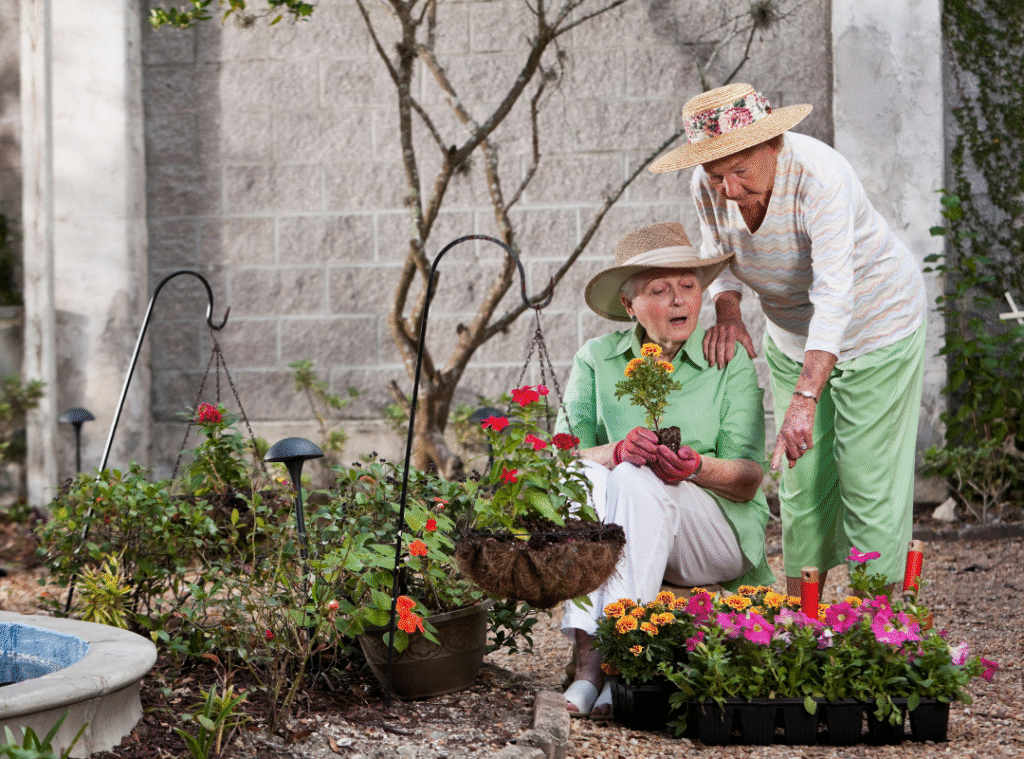
Gardening for elderly adults can be made easier with raised beds, stable containers, lightweight tools, seated tasks, clear pathways, and help with demanding work. The best approach matches the person’s mobility, strength, stamina, memory, interests, and preferred level of participation while keeping the experience comfortable and enjoyable.
Gardening does not need to involve a large yard or hours of work. Watering a favorite plant, growing herbs, choosing flowers, or sitting outdoors can still offer purpose and connection. At My Elderly Home, gardens and outdoor spaces give residents opportunities to enjoy nature in ways that reflect their individual needs and interests.
What Does Gardening for Elderly Adults Involve?
Gardening for elderly adults means adapting the plants, tools, tasks, and environment to match an older person’s current abilities. The activity may include planting, watering, harvesting, arranging containers, removing dry leaves, choosing plants, or simply watching a garden change with the seasons.
A person does not have to dig, kneel, or maintain a full garden to take part. An older adult who cannot lift a bag of soil may still choose the plants and decide where they belong. Someone who prefers a seated activity may enjoy filling a tabletop planter or tending a small herb container.
Start with the part of gardening the person enjoys most. A small task chosen by the older adult can feel more meaningful than a larger project planned for them.

Get in Touch – We’re Here to Help!
How Gardening Can Support an Older Adult’s Daily Life
Gardening can bring gentle activity, routine, sensory engagement, and social connection into an older adult’s day. The value often comes from participating in something familiar and meaningful, not from completing a certain amount of work.
A 2024 systematic review and meta-analysis examining 40 studies found an overall positive relationship between gardening or horticultural activities and measures of well-being, quality of life, and health status. The findings do not mean gardening produces the same results for everyone, but they support its value as a meaningful activity when it suits the individual.
Purpose and Routine
Caring for a plant gives a person something visible to check, tend, and anticipate. Watering herbs in the morning or looking for new flowers can create a manageable routine without filling the day with demanding tasks.
This sense of purpose may be especially valuable when other responsibilities have changed. Even one plant can provide a reason to notice progress and stay connected to the seasons.
Movement and Sensory Engagement
Suitable gardening tasks may involve reaching, grasping, standing, walking, or light movement. Flowers, herbs, soil, leaves, and outdoor air can also engage sight, touch, and smell.
The National Institute on Aging includes gardening among activities that can help older adults stay active. The effort and duration should fit the person’s abilities and comfort, along with any guidance from a qualified professional.
Connection and Conversation
Senior gardening can become a shared activity with family members, caregivers, or other residents. Choosing plants together, discussing a past garden, or harvesting herbs can make conversation feel natural and give everyone a role.
The finished garden may not be the most meaningful result. An elderly gardener may gain more satisfaction from sharing knowledge, selecting a flower, or watching something grow than from doing every physical task.
Choose a Gardening Style That Matches the Person’s Abilities
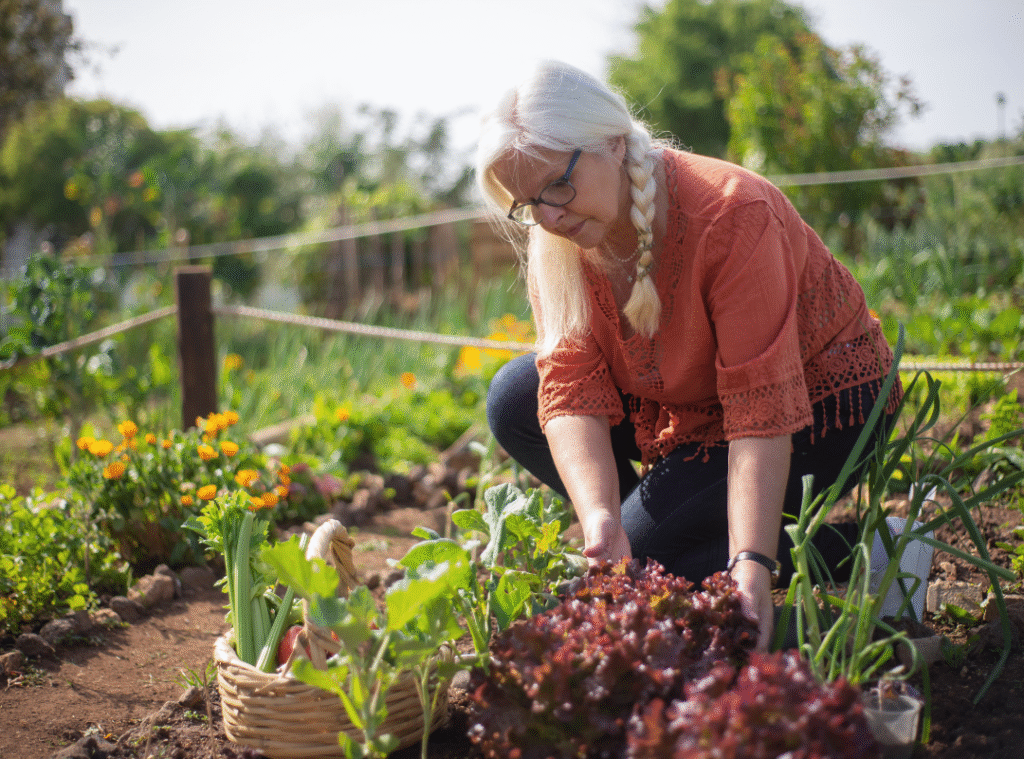
Choose the gardening format by looking at balance, grip, stamina, memory, available space, and the support the person may need.
A useful approach is to select the smallest format that can be maintained comfortably. A few stable containers may provide more enjoyment than a large garden that becomes tiring or depends entirely on someone else.
| Gardening format | May work well when | Helpful adaptations | What families should consider |
| Raised garden bed | Bending or kneeling is uncomfortable | A comfortable working height, reachable planting areas, and nearby seating | Make sure plants can be reached without leaning too far |
| Container garden | Space, mobility, or stamina is limited | Stable containers, manageable pot sizes, and nearby water | Avoid pots that need to be moved often |
| Tabletop planting | The person prefers seated tasks | Shallow containers, organized supplies, and easy-grip tools | Keep all materials within a comfortable reach |
| Indoor herb or windowsill garden | Outdoor access is limited | Secure pots and a convenient location | Consider light, watering needs, and safe access |
| Sensory garden activity | Touching, smelling, and observing are the main goals | Visually distinct, fragrant, or textured plants | Select plants that are appropriate for the setting |
| Shared garden | The person enjoys participating with others | Clearly divided tasks and help with strenuous work | Preserve the older adult’s choices and contributions |
| Garden observation | Physical participation is limited | Comfortable seating and a pleasant garden view | Enjoying the garden is still a meaningful participation |
The person’s interests should guide the final choice. Someone who has always grown herbs may prefer a small herb planter over a larger flower bed. Another person may care more about choosing colors or spending time outside than maintaining plants.
Easy Gardening Ideas for Seniors With Different Abilities
Easy gardening ideas keep the activity focused, flexible, and satisfying. They also make it simpler to adjust the experience when energy, strength, or attention changes from one day to the next.
Low-effort options can include:
- Watering one or two containers
- Choosing flowers for a planter
- Growing herbs in a stable indoor pot
- Removing dry leaves while seated
- Observing and recording new growth
Family members can divide the work. An adult child might prepare the soil or move containers while the older adult chooses the plants, places labels, waters, or directs the arrangement. This lets you help with the harder work while the older adult still makes the choices that matter to them.
For someone experiencing memory changes, use familiar tasks with a clear beginning and end. Arrange supplies before starting, offer one step at a time, and provide suitable supervision when needed. A recognizable plant, repeated activity, or familiar scent may make participation easier, but the person’s comfort should always guide the session.
For another way to plan a meaningful time together, check the My Elderly Home blog.
Gardening Tools and Garden Features That Reduce Strain
Helpful gardening tools for the elderly should be easy to lift, grip, control, see, reach, and store. A tool is not useful simply because it is marketed to seniors. It needs to solve a real difficulty for the person using it.
Tools That Support Grip and Reach
Look for lightweight tools with comfortable handles and simple controls. A larger or ergonomically shaped handle may be easier for some elderly gardeners to hold, while a longer handle may reduce the need to bend. The person should be able to control the tool without using more force than feels comfortable.
Before choosing a tool, ask whether the older adult can lift it, grip it, guide it accurately, reach the task, and put it away safely.
Features That Reduce Bending and Fatigue
Raised beds, tabletop planters, and containers placed at a comfortable height can reduce repeated bending or kneeling. Nearby seating also gives the person a place to work or rest without leaving the area.
Keep soil, watering supplies, and tools close to the plants. Several short steps across a patio may seem minor, but repeated trips can make a simple activity more tiring than expected.
Features That Improve Access
A clear path and a reachable work surface can matter more than buying new tools. Look for stable surfaces, an uncluttered workspace, enough room to move comfortably, and supplies kept within easy reach. Assistance should be available for lifting, digging, moving soil, or handling other demanding tasks.
Gardening preferences may also reveal what an older adult values in daily life. Families exploring those priorities can use the Lifestyle Assessment to think through activities, routines, and the type of environment that may suit their loved one.
A Safer and More Comfortable Senior Gardening Routine
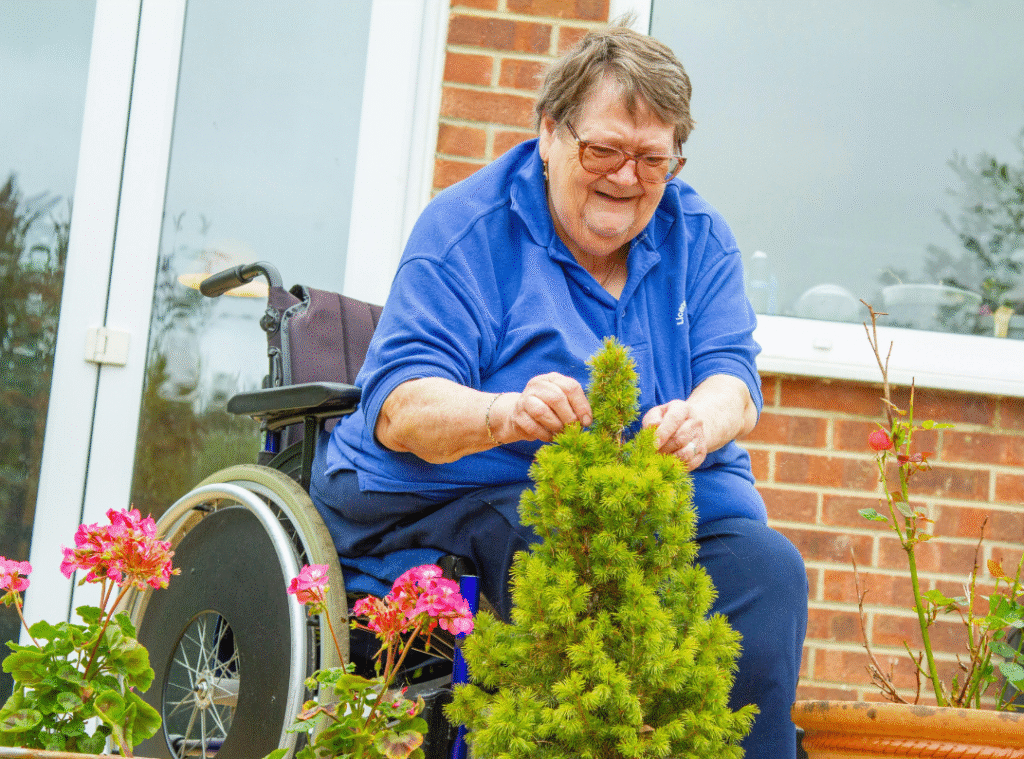
A comfortable routine starts with one manageable goal. Prepare the workspace, choose a task that fits the person’s abilities that day, and arrange help before any lifting or strenuous work begins.
The CDC recommends staying cool, hydrated, and alert to signs of overheating during hot weather. When gardening outdoors, plan activities for a cooler part of the day when possible, provide shade and breaks, and stop if the person feels weak, dizzy, uncomfortable, or unwell.
A simple routine may include:
- Prepare tools, seating, and materials before starting
- Choose one clear and achievable task
- Keep water and needed supplies nearby
- Pause when the person feels tired or uncomfortable
- Review what should be adjusted next time
A “one-task session” can work especially well. The goal might be watering two containers, planting one herb, or removing dry flowers from a single pot. This makes success easy to recognize and leaves room to continue only when the person wants to.
There is no universal session length that suits every senior. The person’s comfort, energy, health needs, environment, and guidance from qualified professionals matter more than completing a fixed number of minutes.
How Families Can Help Without Taking Over
The most supportive approach removes barriers without removing ownership. Family members can handle setup, lifting, digging, or cleanup while the older adult continues making decisions and completing the tasks they enjoy.
Ask what the person wants to plant or do. Adapt the activity to current abilities, assist only where help is needed, and notice what made the experience enjoyable or difficult. This creates a respectful balance between independence and support.
A lifelong gardener may still have strong preferences about plant placement, colors, or care. Taking over every decision can make the activity feel less personal. Let the person direct the project, share gardening knowledge, or choose the next task, even when someone else must complete the heavier work.
Priorities can also change. A person who once maintained a large yard may now prefer tending a few containers, arranging flowers, or sitting in a garden with family. That change does not make the experience less worthwhile.
When the Garden or Activity Needs to Be Reconsidered
A gardening setup needs adjustment when it regularly causes discomfort, exhaustion, confusion, frustration, or difficulty reaching the workspace. The answer is often to change the task or environment, not to stop gardening completely.
Watch for practical signs such as tools that are hard to control, an uneven route to the garden, repeated overreaching, or a project that depends on work the older adult can no longer complete comfortably. Also, notice whether the person still enjoys the activity. A garden that creates pressure instead of satisfaction may no longer fit their needs.
Possible changes include moving from a ground-level bed to containers, shifting to seated planting, growing an indoor herb, sharing the work, or enjoying the garden through observation. Ask, “Which part of gardening still matters most to you?” The answer may be planting, teaching, choosing, harvesting, or simply spending time outdoors.
If changes in mobility, memory, stamina, or participation are also affecting several parts of daily life, not only gardening, your family may have broader questions about support. The Care Assessment can help you consider what type of daily support may be appropriate without treating one difficult gardening session as proof that a specific level of care is needed.
Meaningful Outdoor Activities at My Elderly Home
Gardening for the elderly works best when participation reflects the person’s abilities, preferences, and care needs. At My Elderly Home in North Hollywood, gardens and outdoor spaces complement engaging activity areas, relaxing common lounges, wellness and fitness spaces, and personalized care. The community provides Assisted Living, Memory Care, and Hospice services at its N Beck Avenue and W Cohasset Street locations.
Seeing an environment in person can help you decide whether the spaces, activities, and level of support feel right for your loved one. Arrange a personal visit to explore My Elderly Home, or call 818-919-6499 to ask how daily interests and outdoor activities can be supported.
Care Assessment
Discover the level of care you or your family member requires.
Frequently Asked Questions
What is the 70 30 rule for gardening?
The 70 30 rule is not a universally recognized gardening standard. In many garden-design discussions, it refers to using about 70 percent of the space for lasting structure and 30 percent for seasonal plants or changing features. For an older gardener, the practical idea is to keep most of the garden manageable while reserving a smaller area for new or seasonal projects. The meaning can vary, so check how the term is being used in the specific gardening advice you are following.
How can seniors make gardening easier?
Seniors can make gardening easier by using raised beds, stable containers, lightweight tools, nearby seating, and shorter tasks. Supplies and water should be easy to reach, with clear and stable routes to the garden. Family members or caregivers can handle lifting, digging, and moving heavy materials while the older adult keeps meaningful choices and manageable tasks. The garden should match the person’s current abilities, not the amount of work they completed in the past.
What should a 70-year-old be doing every day?
There is no single daily routine that is right for every 70-year-old. Activities should reflect the person’s health, mobility, interests, care needs, and guidance from qualified professionals. The CDC recommends that adults age 65 and older work toward at least 150 minutes of moderate-intensity activity each week, along with muscle-strengthening and balance activities, when appropriate for them. Gardening may contribute to an active routine, but it should not replace individualized professional advice.
What is the 3-hour gardening rule?
The 3-hour gardening rule is not a recognized health or horticultural guideline for older adults. The phrase sometimes appears in informal comparisons between gardening and other forms of activity, but gardening intensity varies greatly between watering pots, planting, digging, and moving soil. A three-hour session could be too demanding for many people. Choose a manageable task, take breaks, and let the person’s comfort and individual guidance determine how long the activity lasts.