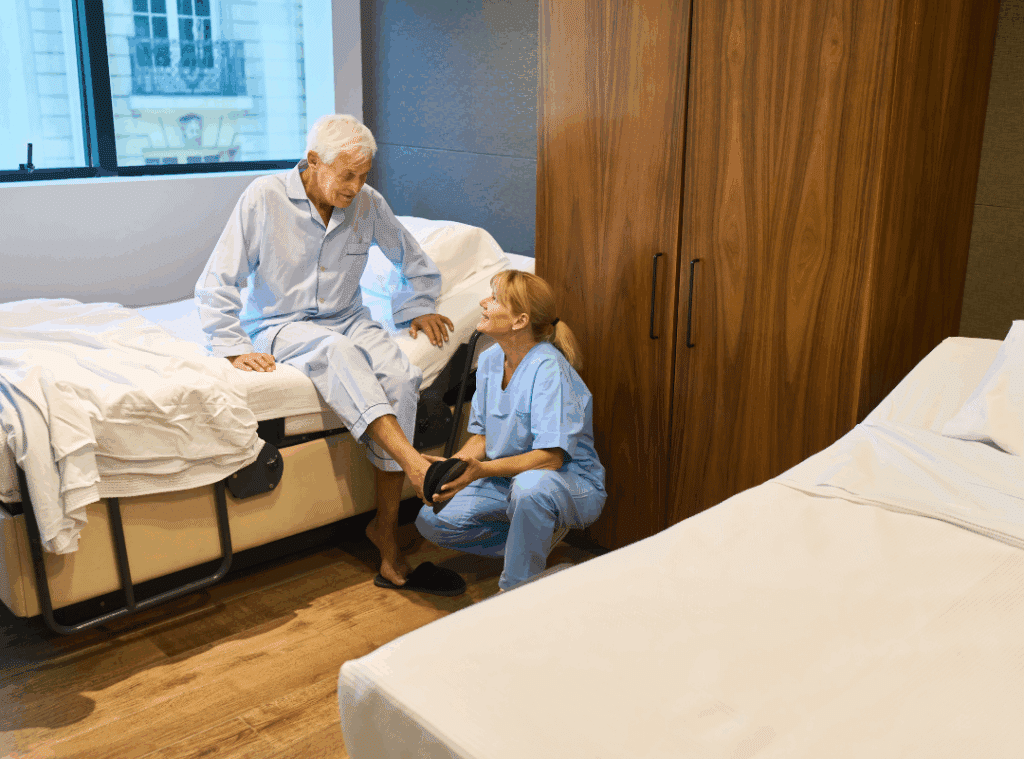
Alzheimer Care Facilities in North Hollywood provide structured routines, personalized assistance, appropriate supervision, and calming surroundings for people living with memory loss. The right setting depends on your loved one’s daily support needs, safety, personality, and comfort, as well as how much care your family can consistently provide.
Finding that setting can feel emotional and uncertain. You may be comparing nearby Alzheimer care options in North Hollywood, wondering when additional support is needed, or trying to understand what meaningful memory care looks like from day to day.
My Elderly Home offers assisted living, memory care, and hospice services at two North Hollywood locations. This guide explains how Alzheimer’s care works, what to compare, and what to observe before choosing a community.
What Is an Alzheimer Care Facility?
An Alzheimer’s care facility is a residential setting that supports people living with Alzheimer’s disease through personalized assistance, consistent routines, appropriate supervision, and an environment designed to reduce confusion.
Dementia is a broad term for changes in memory, language, problem-solving, and other thinking abilities that interfere with daily life. Alzheimer’s is the most common cause of dementia and affects memory, thinking, behavior, and the ability to complete everyday tasks. The National Institute on Aging explains how Alzheimer’s differs from the broader term dementia.
Memory care is a form of residential support for people experiencing cognitive changes from Alzheimer’s or another type of dementia. Alzheimer’s care refers more specifically to support shaped around the symptoms and changing needs associated with Alzheimer’s disease.
These terms often overlap, but the central question is practical: Does the setting provide the assistance, familiarity, supervision, and daily structure your loved one needs?
The need for clear care options affects millions of families. An estimated 7.4 million Americans age 65 and older are living with Alzheimer’s, according to the Alzheimer’s Association Facts and Figures report.

When Should You Consider Specialized Alzheimer’s or Memory Care?
Specialized care may be appropriate when your loved one needs more supervision, personal assistance, or daily structure than can be provided safely and consistently at home.
There is rarely one event that makes the decision obvious. Families often notice a pattern of changes that gradually makes everyday care more difficult. You may find that routines require frequent reminders, safety concerns are increasing, or caregiving responsibilities are becoming hard to sustain.
Care Considerations to Discuss as a Family
Consider whether your loved one is experiencing:
- Growing difficulty in completing familiar daily routines
- A greater need for help with personal care or meals
- Confusion that is becoming harder to manage at home
- Safety concerns that require more regular supervision
- A need for a calmer and more predictable daily environment
These signs do not determine a diagnosis or automatically mean residential care is required. They can help your family identify which questions to discuss with healthcare professionals and care providers. Changes in memory, behavior, or daily functioning should also be discussed with an appropriate healthcare professional.
Your own capacity matters as well. Providing care may become difficult when one person must manage supervision, meals, personal assistance, appointments, and household responsibilities without enough support. Recognizing that the current arrangement is no longer sustainable is not a failure. It is a reason to explore a setting that may provide greater consistency for everyone involved.
The care assessment can help you organize your concerns and consider what level of daily support may be appropriate.
What Support Should an Alzheimer Care Facility Provide?
A suitable Alzheimer’s care facility should support the person as an individual, not only respond to the symptoms of memory loss.
Look at how the setting supports your loved one throughout a normal day. Its care approach, routines, activities, and services should match your loved one’s habits, abilities, and changing needs.
Personalized Care
Personalized care begins with understanding how the resident prefers to move through the day. Familiar routines, personal preferences, communication needs, and the amount of assistance required can all affect comfort.
A person who needs reminders but still enjoys making choices may require a different approach from someone who needs hands-on assistance throughout the day. Care should support the abilities a person still has while providing help where it is needed.
A Calm and Familiar Environment
A calm environment can make daily life easier to understand. Familiar routines, relaxing common lounges, and access to gardens or outdoor areas may help residents feel more settled.
The setting should be comfortable without creating unnecessary stimulation. During a visit, notice whether the rooms feel easy to move through and whether residents can spend time in both shared and quieter spaces.
Meaningful Daily Engagement
Meaningful engagement gives residents opportunities to participate, connect, and use their abilities without pressure. Activities may involve music, conversation, gentle movement, creative projects, or time outdoors.
The most useful activities are adapted to the person. Success is not measured by how much someone completes. A familiar song, a simple task, or time spent in the garden may be more meaningful than a packed schedule.
Nutritious Meals and Everyday Support
Regular meals and personal assistance help create a predictable rhythm. Nutritious meal programs can also reduce the burden of planning, preparing, and monitoring meals at home.
Everyday support may include reminders, guidance, or personalized assistance, depending on the resident’s needs. The goal is to make daily routines feel manageable and respectful.
Appropriate Care Services
My Elderly Home provides:
- Assisted living
- Memory care
- Hospice
The appropriate service depends on the person’s current care needs. Families can review the available care services before discussing which form of support may be the best fit.
Assisted Living, Memory Care, and Smaller Residential Care Settings
Assisted living, memory care, and smaller residential care settings can all provide personal support, but they differ in environment, daily structure, and the level of memory-focused care.
Assisted living generally supports people who need help with daily tasks while maintaining as much independence as possible. Memory care places added emphasis on cognitive changes, predictable routines, supervision, and personalized guidance.
Facility size can also shape a resident’s experience. A larger community may appeal to someone who enjoys more shared areas and broader group activities. A smaller residential home may feel more familiar and less overwhelming for someone who is more comfortable with fewer people.
| Consideration | Larger Assisted Living Setting | Smaller Residential Care Setting |
| Overall environment | Larger community with more shared spaces | More intimate and home-like |
| Resident population | Typically serves more residents | Typically serves fewer residents |
| Daily experience | Broader community schedule | More individualized daily rhythm |
| Social opportunities | May include larger group activities | May include smaller, familiar interactions |
| Personalization | Depends on the community’s care model | May provide greater familiarity with routines |
| Question to ask | Does your loved one enjoy a larger social setting? | Would a quieter setting feel more comfortable? |
Neither environment is automatically the better choice. Think about your loved one’s personality, tolerance for noise and activity, need for supervision, and comfort in group settings.
A person who has always enjoyed busy social spaces may welcome a larger environment. Someone who becomes uneasy in unfamiliar or active surroundings may feel more at ease in a quieter home.
Families comparing these levels of support may also find this guide to assisted living and memory care in Los Angeles helpful.
What Makes My Elderly Home Relevant to Families in North Hollywood?
My Elderly Home provides personalized assisted living, memory care, and hospice services at two North Hollywood locations:
- 7502 N Beck Ave, North Hollywood, CA 91605
- 11517 W Cohasset St, North Hollywood, CA 91605
Available amenities include engaging activity areas, nutritious meal programs, wellness and fitness spaces, relaxing common lounges, and gardens and outdoor spaces.
These features matter because the care environment influences the resident’s entire day. Families are not only choosing a room. They are considering where their loved one will eat, rest, take part in activities, receive assistance, and spend time with others.
You can contact My Elderly Home to discuss either the North Hollywood location or the services available.
How Daily Routines and Activities Support Comfort
Consistent routines can help make the day feel more understandable for someone living with Alzheimer’s or another form of dementia.
Familiar patterns may reduce the number of decisions a person must make. Regular times for meals, personal care, activities, and rest can provide useful cues about what happens next.
Activities also work best when they reflect the resident’s interests and current abilities. A person may enjoy music even when following a complex game has become difficult. Someone who no longer wants to join a group may still enjoy a simple creative activity, a conversation, or quiet time outdoors.
Helpful daily experiences may include gentle group activities, storytelling, art, music, shared meals, wellness activities, and time in gardens or outdoor spaces. Participation should be encouraged without making a resident feel rushed or tested.
A balanced routine leaves room for both engagement and rest. Constant activity can be tiring, while long periods without meaningful interaction may lead to isolation. The aim is a steady daily rhythm that respects the resident’s energy, preferences, and choices.
What Should You Look for During a Tour?
The way a community feels during an ordinary day can tell you more than its appearance alone.
Pay attention to the overall atmosphere as soon as you enter. Notice whether the space feels calm, comfortable, and easy to move through. Consider how your loved one might respond to the noise level, layout, shared spaces, and outdoor areas.
Ask about:
- How care is personalized for each resident
- How the community determines each resident’s need for support and oversight
- What a typical daily routine looks like
- How activities are adjusted to different abilities
- How families communicate with the care team
Listen for answers that are clear and specific. You should leave with a better understanding of how your loved one’s usual day, preferences, and support needs would be handled.
Consider whether the setting feels like somewhere your loved one could become familiar with over time. A polished appearance is valuable, but everyday comfort, respectful communication, and an appropriate care approach matter just as much.
You can schedule a tour to visit My Elderly Home and explore the environment in person.
Alzheimer Care Costs in North Hollywood
The cost of Alzheimer’s care should be evaluated alongside the room type, level of personal support, services, and overall care environment.
At My Elderly Home, shared rooms start at $6,000, and private rooms start at $8,000. Individual care requirements may affect the final care arrangement.
Price alone does not show whether a setting is suitable. Ask what care is provided, how routines are personalized, which services are available, and how the environment supports your loved one’s needs. A higher or lower price has little meaning without understanding what the resident will experience each day.
It is also helpful to understand how long-term care differs from skilled nursing and medical care. Medicare states that it generally does not cover non-medical long-term or custodial care, although it may cover eligible medical services in certain settings. Families can review Medicare’s explanation of long-term care coverage and discuss their circumstances with the appropriate plan or financial professional.
The cost comparison tool can help you organize the factors that matter as you evaluate different care options.
How to Compare Alzheimer Care Facilities With Confidence
The right facility should meet your loved one’s needs while providing an environment where they can feel secure, respected, and comfortable.
Use the CARE framework to focus on the factors most likely to affect daily comfort and support.
C: Care Needs
Identify the assistance your loved one currently requires. Consider personal care, meals, reminders, supervision, communication, and help with completing daily routines.
Ask whether the care approach can be adjusted as those needs change.
A: Atmosphere
Notice how the environment makes you feel. Is it calm and welcoming? Does the layout seem manageable? Are there comfortable shared spaces and places for quieter moments?
Picture your loved one moving through an ordinary day there.
R: Routine and Relationships
Ask how the community learns each resident’s preferences and daily habits. Consistent routines and familiar relationships can help a person feel more secure.
The schedule should offer structure while still allowing personal choice.
E: Evolving Needs
Consider whether the available services fit both current and possible future needs. Ask how care discussions are handled when a resident requires more assistance.
You do not need to predict every future change. You do need a clear understanding of what the community can provide and when another type of care might be needed.
The lifestyle assessment may help you think through the environment and daily experiences that could suit your loved one.
Explore Alzheimer Care Options at My Elderly Home
The right Alzheimer care setting should provide suitable support, a comfortable atmosphere, and services that reflect your loved one’s needs. Visiting in person can help you decide whether the environment feels right for your family.
You can schedule a tour to experience either North Hollywood location, contact us with questions, or call My Elderly Home at 818-919-6499 to discuss care needs and room options.

Get in Touch – We’re Here to Help!
Frequently Asked Questions
Where is the best place for a dementia patient to live?
The best place for a person with dementia is a setting that safely meets their care, supervision, and daily living needs. Some people can remain at home when reliable family or professional support is available. Others may benefit from assisted living or memory care as their needs change. The person’s comfort, abilities, safety, and preferred environment should guide the decision.
When should an Alzheimer’s patient go to a nursing home?
A person with Alzheimer’s may need nursing home care when they require ongoing nursing services or a level of medical support that cannot be provided safely in their current setting. A nursing home is not automatically the next step for everyone with Alzheimer’s. Assisted living or memory care may be appropriate for people who need personal assistance, structure, and supervision without continuous nursing care. Families should compare the person’s medical needs, daily support needs, and the services each setting is approved to provide.
What is the difference between memory care and Alzheimer’s care?
Memory care supports people living with Alzheimer’s disease and other conditions that affect memory and thinking. Alzheimer’s care refers more specifically to support shaped around the symptoms and progression of Alzheimer’s disease. Both may include structured routines, personal assistance, supervision, and meaningful activities. The most important factor is whether the care approach matches the individual resident’s needs.
What should you ask when touring an Alzheimer’s care facility?
Ask how the facility personalizes care, plans daily routines, supports meals, and adapts activities to different abilities. You should also ask how families communicate with the care team and how changing needs are discussed. Observe whether the environment feels calm, comfortable, and easy to navigate. Clear answers and a welcoming atmosphere can help you decide whether the setting feels appropriate for your loved one.
How much does care at My Elderly Home start at?
Shared rooms at My Elderly Home start at $6,000, while private rooms start at $8,000. Individual care needs may affect the final arrangement. Families should compare the room, services, personalized support, and daily environment together. Contact the community to discuss current needs and available options.