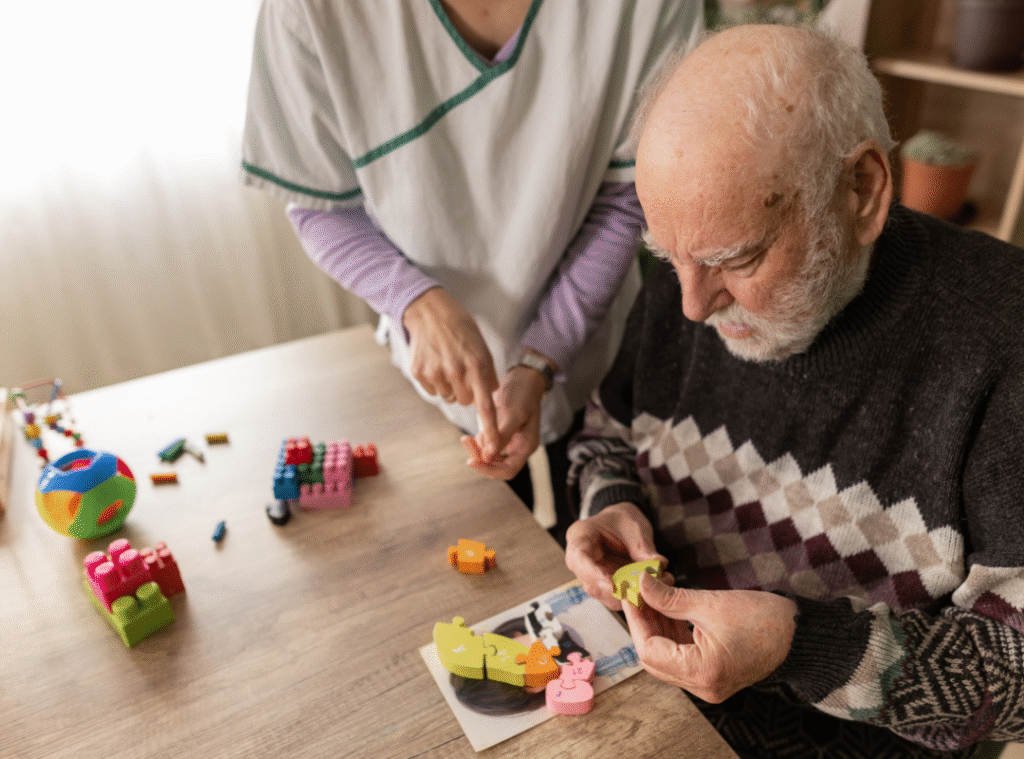
Sensory activities for dementia patients use touch, sound, sight, smell, taste, or movement to create comfortable ways to participate and connect. A suitable activity reflects the person’s interests, current abilities, energy, and response. The goal is meaningful engagement, not testing memory or completing a task perfectly.
A familiar song, a soft towel to fold, or a few flowers to arrange may be more inviting than an elaborate project. You will learn how to select activities, adjust them for different abilities, recognize signs of comfort or distress, and include sensory engagement naturally in a daily routine.

Get in Touch – We’re Here to Help!
What Are Sensory Activities for Dementia Patients?
Sensory activities for dementia patients are simple experiences that engage one or more senses, including touch, sound, sight, smell, taste, movement, and awareness of body position. They offer a manageable way to take part in something familiar, pleasant, or purposeful without depending heavily on memory or complex instructions.
These activities are not limited to special sensory products. Folding towels, watering plants, listening to music, kneading dough, looking through photographs, or sorting safe household items can all provide sensory engagement. Crafts, cognitive tasks, physical movement, and everyday routines may also become sensory experiences when they match the person’s abilities and interests.
How Sensory Activities May Benefit a Person With Dementia
Well-matched activities may support participation, purposeful movement, enjoyment, and connection with others. They can give someone a way to engage even when conversation or multi-step tasks have become difficult. The Alzheimer’s Association explains that activities can be adapted to a person’s abilities and may enhance quality of life for people living with dementia.
The benefit is often visible in the person’s response, not in the finished result. A relaxed posture, smile, hum, reaching motion, or willingness to stay involved may show that the experience feels comfortable. A sound, scent, or texture one person enjoys may feel unpleasant to someone else, so caregivers should avoid treating any activity as universally calming.
Families sometimes focus on whether an activity was completed correctly. A more useful question is whether it supported interest, comfort, movement, or a shared moment. Even a few minutes of willing participation can be meaningful.
A Practical Way to Choose the Right Sensory Activity
A suitable sensory activity fits four things: the person, the moment, the level of demand, and the response. This simple process can help you move beyond generic activity lists and choose something that makes sense for the individual in front of you.
Start With the Person
Begin with familiar interests, hobbies, occupations, household roles, music, foods, materials, or outdoor experiences. Think about what the person currently enjoys and can manage, not only what they enjoyed years ago. The Alzheimer’s Association recommends taking cues from what the person likes and can do, as well as what they are in the mood for that day.
Match the Moment
The same activity may feel enjoyable at one time and tiring at another. Energy, mood, alertness, noise, hunger, discomfort, or too many people nearby can affect how easily the person becomes involved.
Adjust the Demand
Make the activity easier to begin by reducing the number of steps, tools, choices, or instructions. You might set up the materials in advance, demonstrate one motion, or invite the person to complete only one part.
Watch the Response
The person’s verbal and nonverbal signals can help you decide whether to continue, simplify, or stop. A refusal does not always mean the activity should never be offered again. The timing, environment, materials, or presentation may not have been right at that moment.
Sensory Activity Ideas by Type and Ability
Sensory activities can overlap. A gardening task may involve touch, sight, smell, movement, and memory at the same time. The table below can help you choose a starting point and adjust the experience without losing its meaning.
| Activity type | Simple examples | What it may support | Ways to adapt it |
| Touch and hand use | Folding soft towels, sorting large objects, and handling textured fabric | Tactile engagement and purposeful hand use | Offer fewer objects or use larger, easy-to-hold items |
| Creative and craft | Painting with a large brush, arranging paper shapes, and decorating a card | Expression and visual-tactile participation | Prepare materials and focus on the process |
| Sound and music | Familiar songs, gentle instruments, nature sounds | Shared attention, familiarity, or rhythmic participation | Lower the volume and keep sessions brief |
| Sight and visual interest | Photo albums, flowers, colorful objects, and garden views | Visual attention and possible conversation | Reduce clutter and present one item at a time |
| Smell and taste | Familiar foods, herbs, flowers, baking aromas | Recognition, curiosity, and enjoyment | Consider allergies, dietary needs, swallowing concerns, and scent sensitivity |
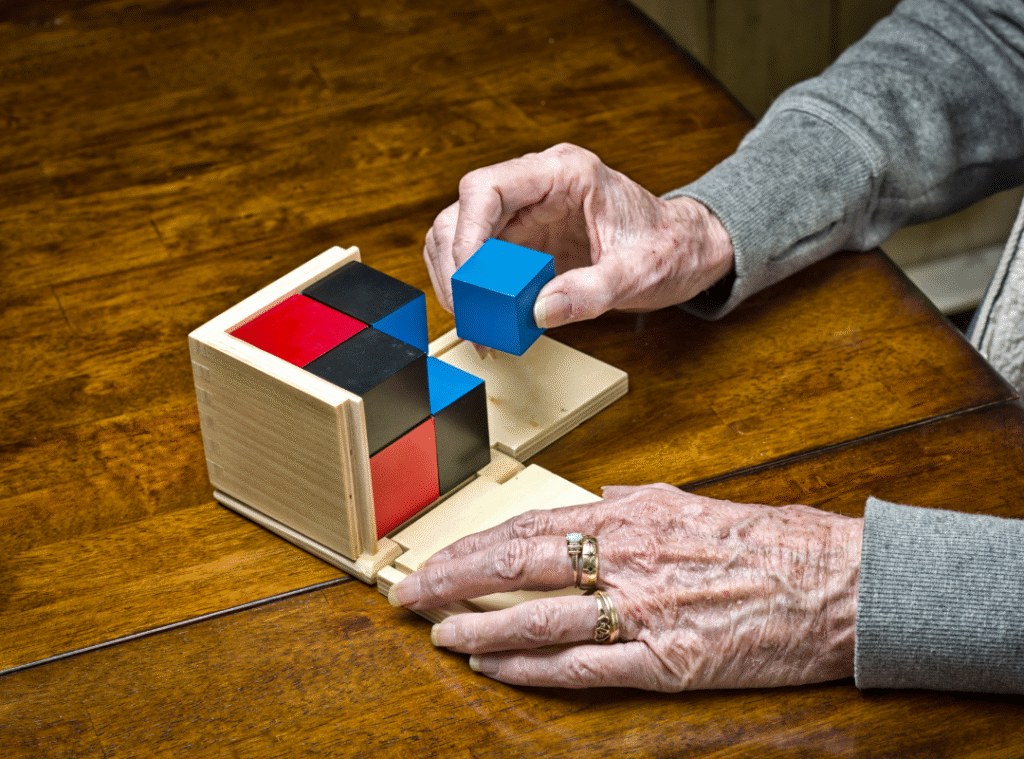
| Cognitive-sensory | Matching objects, sorting colors, completing familiar phrases | Attention and manageable problem-solving | Offer clues and avoid correcting mistakes |
| Movement and body awareness | Walking, seated reaching, light stretching, moving to music | Mobility, rhythm, and body awareness | Match movement to strength, balance, and professional guidance |
The easiest activity is not always the best one. Choose an experience with enough familiarity to feel welcoming and enough flexibility to let the person take part in their own way.
Things for Dementia Patients to Do With Their Hands
Good things for dementia patients to do with their hands include folding soft fabrics, sorting large objects, arranging flowers, watering plants, kneading dough, or turning the pages of a familiar photo album. Hand-based tasks may be easier to understand than activities that depend on lengthy explanations, especially when the motion connects with an old hobby or household routine.
Use safe, easy-to-handle materials and remove pieces that are sharp, breakable, toxic, or small enough to swallow. Offer one clear starting action and let the person decide how long to continue. Familiar movements often feel more natural than an unfamiliar product presented only as a “dementia activity.”
How to Simplify Craft and Cognitive Activities Without Removing Their Meaning
Creative and cognitive activities should offer an accessible way to participate without drawing attention to lost skills. You can simplify the setup, choices, and instructions while preserving adult interests, personal taste, and dignity.
Adapting Craft Activities for Dementia Patients
Prepare materials before you begin, offer one step at a time, and use large tools that are easy to hold. Two suitable color choices may feel more manageable than a full box of supplies. Craft activities for dementia patients can also be divided so the person completes only the parts they enjoy, such as choosing colors, pressing shapes, brushing paint, or arranging pieces.
A craft activity for an older adult living with dementia does not need a polished result to have value. The colors, textures, hand movements, and time spent together may be the most meaningful parts of the experience. Avoid taking over too quickly or correcting choices that do not affect safety.
Adapting Cognitive Activities for the Elderly
Supportive cognitive activities for the elderly provide clues, familiarity, and room to succeed. Sorting visible objects is often easier than recalling hidden information, while looking at photographs can invite conversation without turning the moment into a memory quiz. Give one instruction at a time and allow extra time for a response.
A supportive cognitive activity offers familiarity and achievable choices. A frustrating activity depends on correction, speed, repeated memory testing, or several instructions at once. Guidance from the Alzheimer’s Association on adapting activities also recommends keeping projects at an adult level, helping the person begin, allowing enough time, and using safe materials.

Physical Activities and Exercise for Dementia Patients
Physical activities for dementia patients may include short supervised walks, seated reaching, passing or rolling a soft ball, watering plants, or moving gently to familiar music. These activities can engage balance, rhythm, touch, sight, and awareness of body position at the same time.
Before introducing exercise for dementia patients, consider mobility, balance, pain, fatigue, footwear, the surrounding space, and the person’s ability to follow directions. Clear obstacles, keep the pace manageable, and stop if the person appears uncomfortable or unusually tired. Exercises for dementia patients should also follow any individualized guidance already provided by healthcare or rehabilitation professionals.
For general context, the CDC recommends that adults age 65 and older work toward at least 150 minutes of moderate-intensity aerobic activity each week, along with muscle-strengthening and balance activities. This is a broad public health guideline, not an individual exercise plan for someone living with dementia. Ability, health, and professional guidance should shape what is appropriate.
Signs an Activity Should Be Changed, Paused, or Stopped
An activity should be adjusted when the person’s response suggests that it is confusing, tiring, uncomfortable, or overstimulating. Watching the person before, during, and after the experience can tell you more than the amount of time they spend on it.
Signs that an activity may be working include:
- Willing participation or reaching toward the materials
- A relaxed face, hands, or posture
- Smiling, humming, talking, or making eye contact
- Returning attention to the activity without repeated prompting
Pulling away, covering the ears, closing the eyes, pacing, grimacing, repeated refusal, or trying to mouth unsafe objects may signal that something needs to change. You can lower the noise, remove extra choices, shorten the activity, switch materials, or move to a quieter space.
If discomfort continues, stop. Ending early is not a failure. It gives you useful information about the person’s preferences, limits, and needs at that time.
Building Sensory Engagement Into a Daily Routine
Sensory engagement can be part of familiar daily life without becoming a packed activity schedule. Music while getting ready, choosing between two clothing textures, helping with a safe mealtime step, watering a plant, folding washcloths, or looking through a book can add manageable moments of participation.
The Alzheimer’s Association includes household chores, meals, creative activities, intellectual activities, and physical movement among the experiences that can be considered in a daily care plan. You might use music or natural light in the morning, crafts or movement during a more alert part of the day, and quiet sounds or soft fabrics in the evening.
Keep the routine flexible and repeat what the person enjoys. A brief note about preferred music, textures, activities, and signs of discomfort can help family members and caregivers offer more consistent support. Families exploring how daily engagement fits into a broader care setting may also find the Los Angeles Memory Care Guide for Families useful for comparing support, routines, and possible next steps.
Meaningful Engagement at My Elderly Home
Meaningful engagement begins with the person, not a fixed activity list. At My Elderly Home, families can explore Memory Care and other available services in North Hollywood, with Personalized Care and spaces that may support different types of daily engagement, including engaging activity areas, wellness and fitness spaces, relaxing common lounges, and gardens and outdoor spaces.
My Elderly Home serves families at 7502 N Beck Ave and 11517 W Cohasset St in North Hollywood. If you are wondering whether your loved one may need more structured support, the Care Assessment can help you consider current needs. You can also schedule a personal tour, contact the community, or call 818-919-6499 to ask how individual interests and abilities can be supported.
Care Assessment
Discover the level of care you or your family member requires.
Frequently Asked Questions
How can families choose sensory activities based on a person’s preferences and comfort?
Start with familiar interests, routines, sounds, textures, foods, and places the person has enjoyed. Match the activity to their current abilities, energy, and mood instead of relying only on past preferences. Introduce one experience at a time and watch their verbal and nonverbal response. Adjust or stop the activity if they appear tired, tense, confused, or uncomfortable.
What things for dementia patients to do with their hands may support calm engagement?
Hand activities may include folding soft towels, sorting large safe objects, arranging flowers, kneading dough, watering plants, or turning photo-album pages. Familiar and purposeful movements may be easier to approach than complex or unfamiliar projects. Choose materials that are safe to touch and too large to swallow. Keep the activity optional because the same task will not feel calming to every person.
How can craft activities for dementia patients be simplified for different abilities?
Prepare the materials in advance and offer one clear step at a time. Use large, easy-to-grip tools and limit choices to a few suitable options. Let the person participate in only the parts they enjoy, such as selecting colors or placing shapes. Focus on the experience and expression, not whether the final craft looks a certain way.
What should caregivers consider before introducing physical activities for dementia patients?
Consider the person’s mobility, balance, pain, fatigue, footwear, surroundings, and ability to follow directions. Use a clear space and provide supervision suited to the person’s needs. Follow any exercise guidance already given by healthcare or rehabilitation professionals. Pause the activity if the person shows pain, unusual tiredness, fear, or difficulty moving safely.
How can cognitive activities for the elderly be adapted to avoid frustration?
Use familiar objects, visible clues, limited choices, and one instruction at a time. Sorting, matching, and looking at photographs may be easier than tasks that require unsupported recall. Avoid quizzing, timing, or repeatedly correcting the person. Move to a simpler or more sensory-focused activity if frustration begins.
How can exercise for dementia patients be included safely in a daily routine?
Choose a familiar movement that matches the person’s health, mobility, and energy at that time of day. Walking, seated movement, gentle reaching, or moving to music may be suitable when they align with professional guidance. Keep pathways clear and provide the level of supervision the person needs. Focus on safe, comfortable participation instead of repetitions, speed, or performance.